
The answer, according to Nacho Barrionuevo, is two hours west, to a small village called Bolonia.
'The sand is softer here,' he explains. 'It's a lot more comfortable to lie on. When I was a kid, living in the middle of Malaga, we always used to come here.'
In fact, many of the beaches on the Costa del Sol are made up of gritty sand imported from the Sahara.
Here, in sleepy Cadiz province, nobody has been shifting lorry loads of sand down the narrow lanes to the beach. It came here the way it's supposed to, carried over millennia by rolling Atlantic waves that crushed it into that fine, invitingly soft powder.
During my visit to Bolonia, long before the summer season, there's nobody lying on the sand. There's nobody here at all except a small, round bird with long, spindly legs that Nacho tells me is a Kentish plover. Behind us slopes a 30-metre-high dune - the biggest in Spain and, next to that, the remains of a Roman settlement, Baelo Claudia, once one of the most important on the coast.
Where is the Costa de la luz
However, if you don't mind the waves - the sea is the choppy Atlantic rather than the warm, gentle Mediterranean - this part of Spain is far more appealing. Where other Spanish coasts have witnessed untrammelled construction, with a ribbon of grey concrete running along a huge stretch of the Costa del Sol, here the beaches back on to dunes or forests, national parks that run wild with rare animals such as the Iberian lynx and the abundant birdlife that attracted Nacho.
Book your next car hire in Spain with Which? Recommend Provider,On the trail of Nelson in Cape Trafalgar
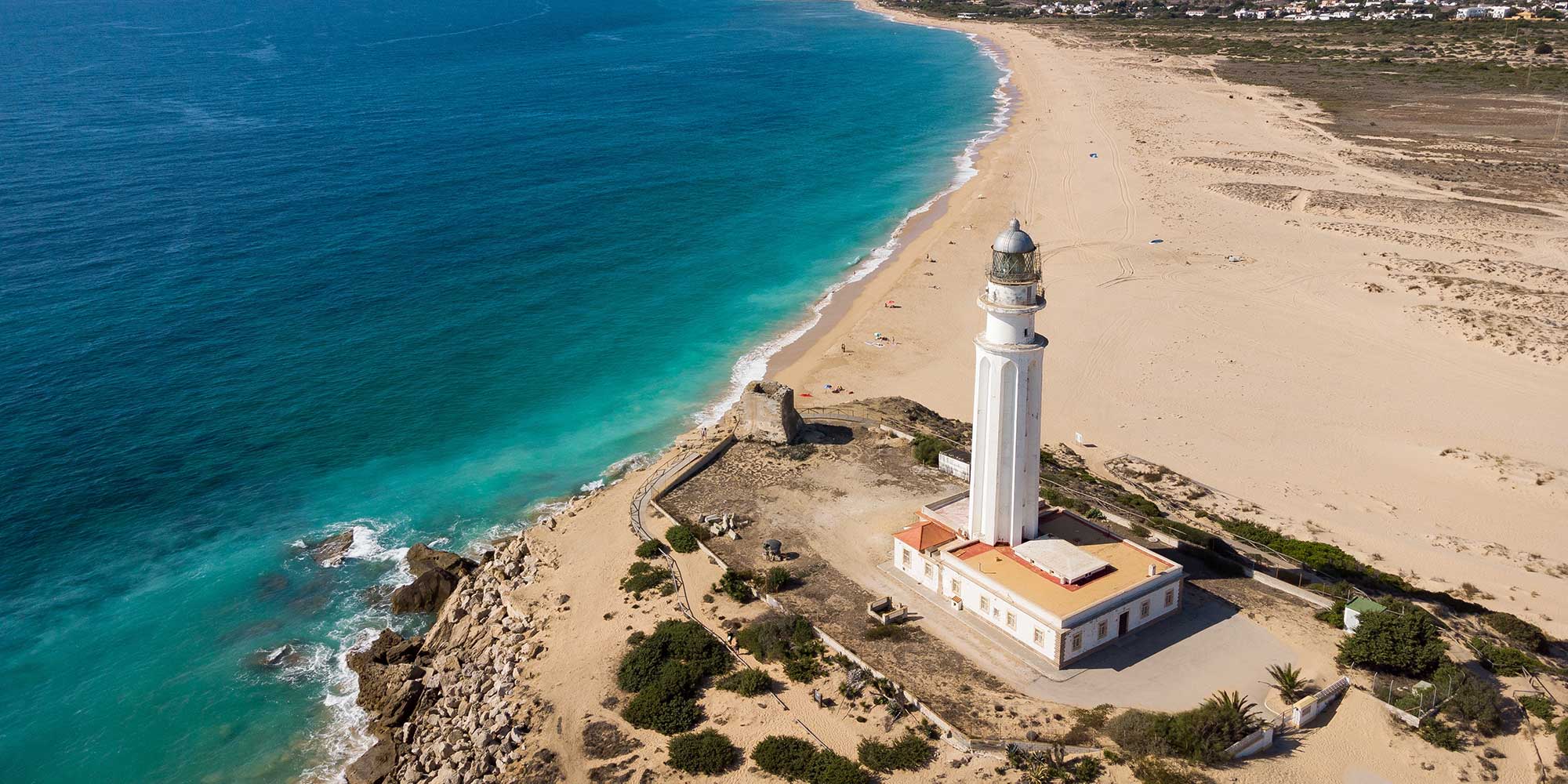
I'm the only person to get off the bus at Los Caños de Meca, about an hour from Cadiz, where I've been staying. It's late afternoon and the dusk gives the whitewashed houses a pastel glow.
My first thought is: where is everybody? I was expecting a small village but this is more like a collection of houses tumbling towards the sea. On one side of the narrow coastal road, a couple of dust tracks lead up into forested hills. On the other side, beyond the houses, sand dunes roll down to the beach. I'd been recommended Caños de Meca by a friend from Cadiz who told me that, in the 80s and 90s, its wild beauty meant it was the great hippy hangout of the coast. In those days, travellers would drive straight onto the sand in their camper vans, pull out guitars and sound systems and party all night. Now there's a wooden barrier to stop you being able to drive onto the beach. Too much peace and love was crushing all the rare grasses and flowers.
After leaving my bag at one of the couple of inexpensive hotels along the main road, I walk down to the beach over the boardwalks that now protect the flora that clings to the dunes; gnarly juniper and twisted mastic trees, spiky marram grass and pink and yellow crocus.
'Before long, men must convince themselves that it is a madness to make such terrible wars, and there will come a day when they will embrace each other, all agreeing to form only one family.'The war that the writer - Benito Perez Galdos - was lamenting is the Battle of Trafalgar. If I'd stood on this same spot just before lunch on 21 October 1805, I'd have seen the sails of Nelson's navy, advancing in two terrible columns, pillars of smoke rising into the air as they exchanged cannon and musket fire with the French and Spanish ships. There's a poignant contrast between the cracked, almost illegible plaque here - and Nelson's triumphant column in London.
Now, 220 years later, Caños de Meca is the perfect little beach town, with the emphasis on beach. This village is dwarfed by the sea and the hills all around it. It's the place for hikes up through the forest of stone pine trees with tight, oval crowns, so perfectly symmetrical they look like they belong in a picture book; along windswept cliffs and down into sheltered coves. However, when I explore the bars and cafés along the front there's still a strong sense that this place has its own, distinct identity.
simpaHotels on the beach
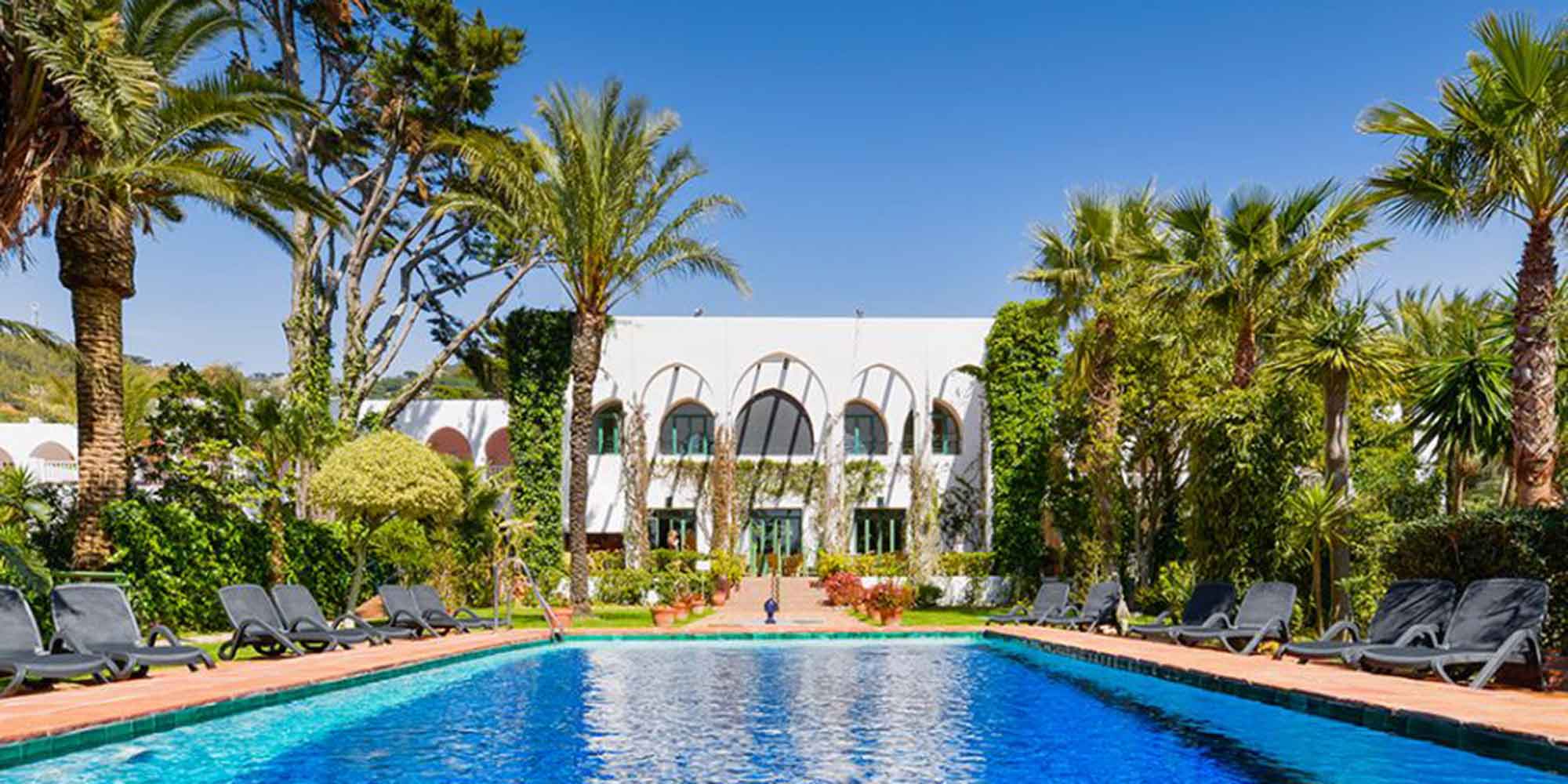
The news that Tarifa is now 'the new Marbella came as a blow. That's where I'm heading next, to enjoy something that's almost unique in Spain - hotels that are right on the beach. I remember Tarifa, a town of around 18,000 people at the southernmost tip of Spain, as a relaxed, fairly inexpensive place, rather than somewhere for the yachting set.
I don't plan to hang out on any superyachts, and, a 10-minute drive out of town, Los Lances beach - one of my favourite places in Spain - is unchanged. I first came here 10 years ago, and there are still three small hotels spread out along about a kilometre of the wild, unspoilt sand - Hotel Hurricane, Hotel Dos Mares and Hotel Arte Vida. In most parts of Spain there are, quite rightly, strict rules about building next to the beach. However, these low-rise buildings, with between 11 and 30 rooms each, blend discreetly into the surroundings, half hidden by the palms, with almost no traffic noise, and no other buildings at all nearby.
The beach itself stretches in an endless golden strip in both directions, with jagged sandstone cliffs behind it, providing shelter against the breeze. The name Hotel Hurricane is - in part - a joke but it's also a wry acknowledgement of why the Costa del Sol crowd aren't hammering down its doors for a room. The narrow straits of Gibraltar do act like a wind tunnel, meaning Tarifa is the greatest place in Spain for kitesurfing and windsurfing.
However, it's worth putting up with a bit of a breeze for the natural beauty on this part of the coast. A huge amount of wildlife is also funnelled through that 14-kilometre gap between Europe and Africa, making it one of one of the world's great spots for nature lovers.
almadrabaIs this Spain's best beach?
Most people head to the Costa del Sol for the beaches. But, as Nacho says, the beaches on the Costa de la Luz don't just have fewer tourists, they're better all round. If you simply want to lie on the sand, then my suggestion is the soft beach of Bolonia. If you want to experience the seaside of southern Spain at its wildest and most beautiful, you could choose almost anywhere on this long strip of coast.
And the beauty of the Costa de la Luz is not just the sun and the sand. You can find that all the way around southern Spain. It's the natural beauty, the history and culture. Like the Kentish plover we spotted picking its way along the sand at Bolonia, I'll have to head north again soon, but I'll definitely be back.
undefinedsource https://www.which.co.uk/news/article/is-this-spains-best-beach-aFU4e8t3ozRK