
What is copy trading?
Social trading is a fast-growing online world where casual investors discuss portfolios and markets, potentially influencing investment decisions.
Copy trading takes this a step further and investors mirror the portfolio and trades of another user of the platform. When they buy a stock, you buy it, too.
Trading 212 offers ‘social pies’, where other users share portfolios – displayed as pie charts, hence the name – and you can replicate them yourself.
Pies tend to be focused on a theme, such as dividends or retirement. Often, users of the app make topical pies – for example, the war in Iran or even the 2026 FIFA World Cup – and make pies they think will perform well in the context of those events.
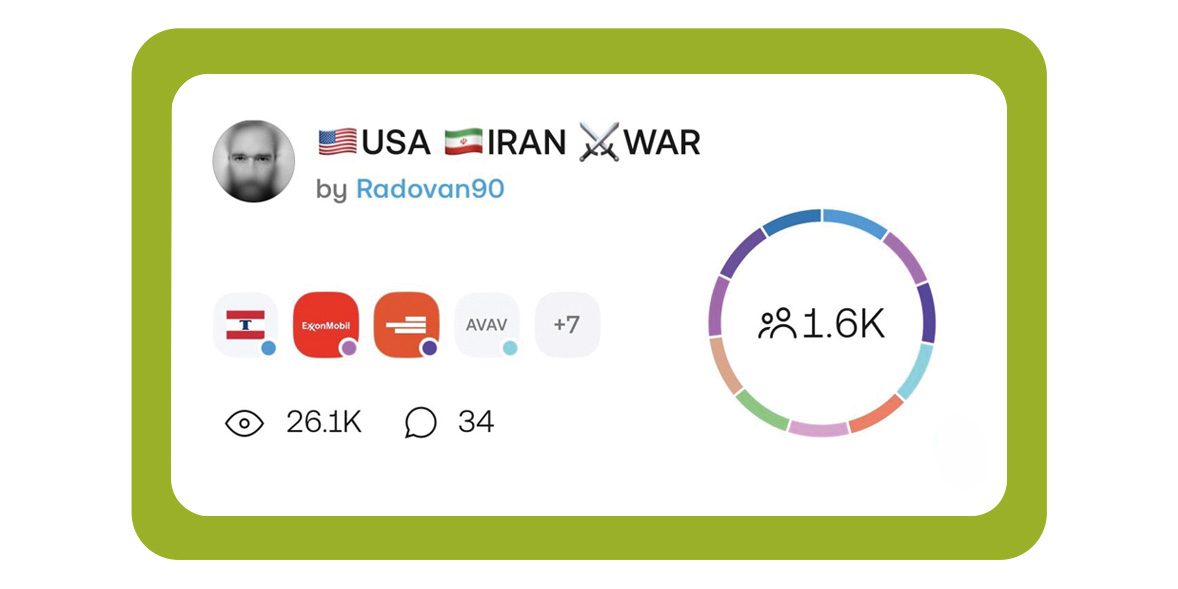
Trading 212 will notify you when the original investor changes the pie, and you can accept the same changes, but they don't apply automatically. This means Trading 212 classifies their service as social trading, rather than copy trading.
eToro’s CopyTrader service, on the other hand, has ‘popular investors’, focusing on the people behind the portfolios. You automatically copy the trades of the original investor with eToro.
This popular investor programme also pays commissions to traders who have many people copying them, while Trading 212 pie-makers get nothing back.
Does copying lead to bigger risks?
Given they’re not professionals, the popular investors or pies you copy are also just as liable to make some of the same common mistakes as other retail investors or amateurs.
Bige Kahraman, associate professor of finance at the Saïd Business School in the University of Oxford, explains: ‘Retail investors have a tendency to realise gains too soon, but if it’s a losing stock, they hold onto it too long, and this means they underperform.
‘The copied investor might make everyone suffer for this, and it increases tax liability and therefore costs.’
eToro’s CopyTrader also includes very high-risk investments, such as crypto and contracts for difference (CFDs), neither of which can be held in an Isa for tax-free returns.
More worryingly, the Financial Conduct Authority (FCA) told us: ‘Crypto and CFDs are complex, high-risk products and consumers should understand that they may lose the money they invest in them.
‘Firms must make sure that customers clearly understand the risks before allowing them to trade, and take additional steps to consider suitability when customers are copying someone else’s strategy. Firms must comply with the consumer duty, which sets higher and clearer standards of protection and requires them to put customers’ needs first.'
Find out more:No safety in numbers
We ran user testing in February 2026 with 10 people who had either never invested or had invested before but described themselves as beginners. They chose who they would copy and explained why.
Most of our testers were overwhelmed by the choice on offer, so they gravitated towards the most popular investors and pies. On Trading 212, pies are listed starting from the most popular, and our testers didn’t tend to scroll far to find which to copy.
eToro’s biggest investor is Thomas Parry Jones, who has 34,000 copiers with a combined $307m. Half of our testers chose to copy him, too.
At the time of our testing, his profile showed a huge 155% return over the past two years, which was another big draw. It’s unlikely all copiers will get results like these for themselves, though.
For starters, doing well in your investments in the past isn't necessarily a good indicator that you'll do well in the future. In the past six months, Jones' portfolio is down 7%, inspiring angry comments on his posts from those who signed up too late to share in his success.
Simon Weidenholzer, professor of economics at the University of Essex, said: ‘At the same time as you see high returns, you don't see the counterfactual – basically all those people who might have followed similar strategies and who have not earned these returns or, worse, just went bust on such platforms.
‘There's a lot of luck in financial markets. And so if you don't acknowledge that and focus maybe too much on the salience of previous success, you might be unlucky yourself.’
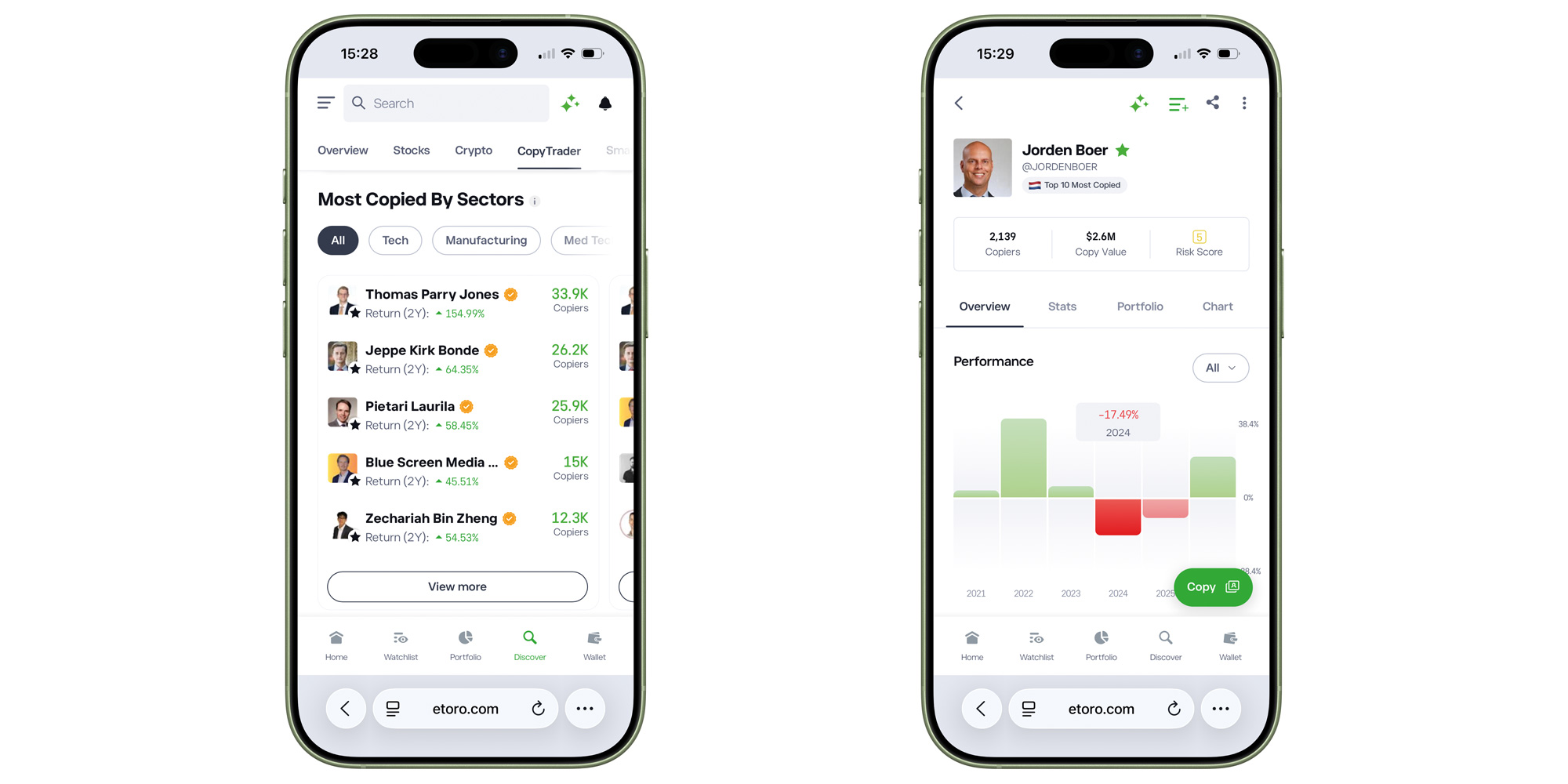
Copied investors are also actively trading, so it matters hugely to their returns when they bought and sold certain assets. You could have set up a copy two years ago and copied every move exactly, but because you didn’t buy at the same price, you could have performed much worse.
What worked for a solo investor might also not work for a pool of money of that size.
The more money following one investor, the more likely they are to run into the same complex issues facing fund managers. For example, if an investor with hundreds of millions under management buys a share in a smaller company, the amount of money following them risks affecting the share price and, therefore, the returns of the copying investors.
Find out more:What do platforms tell you about risk?
While investing in a fund, you'll see a risk score from 1 to 7, which is standardised across the industry. Copy trading and social trading don't have equivalent measures to help you understand whether an investment is right for you.
Trading 212 didn’t offer any kind of risk scoring for its social pies, but a risk level is indicated in the AI analysis of each pie. For the most popular pie, the AI analysis at the top of the page indicates a ‘moderate overall risk level’.
Trading 212 said: ‘Because Pies are heavily customised and dynamic – with users usually adjusting asset weightings according to their liking – assigning a static, standardised risk score is highly complex. However, we do agree that clear risk communication is vital. We currently use AI-driven insights to help summarise the overall risk level of popular Pies, and we take your feedback on board.’
On eToro, you get a risk score calculated on the volatility in the investor’s portfolio in a seven-day average of risk over just the last three months. For context, the FCA’s new rules will require funds to measure their risk over 10 years.
eToro said: ‘CopyTrader allows users to observe and replicate the strategies of experienced investors in a transparent and controlled way, where the copier always remains in full control of their capital.
‘Users can view risk scores across multiple timeframes, including monthly averages and daily maximums, going back over the past 12 months.
‘eToro users are subject to a series of appropriateness tests which impact which asset classes they have access to.’
The new normal
There remain plenty of questions to be answered, such as how regulations designed for professionally managed portfolios apply to the decisions of popular amateur investors whose choices may seriously impact your financial future.
At present, there seems to be little to rein in a complicated service rapidly heading to the mainstream.
source https://www.which.co.uk/news/article/will-copying-someone-elses-investments-make-you-better-off-advNh8r7dYMT