
We’ll explore the different circumstances in which people retire and share advice to help you prepare for life after work.
In this article, Which? member Jon Jaffa explains how retirement planning presents different challenges when you're self-employed, and tells the story of how a community rallied to buy his family business.
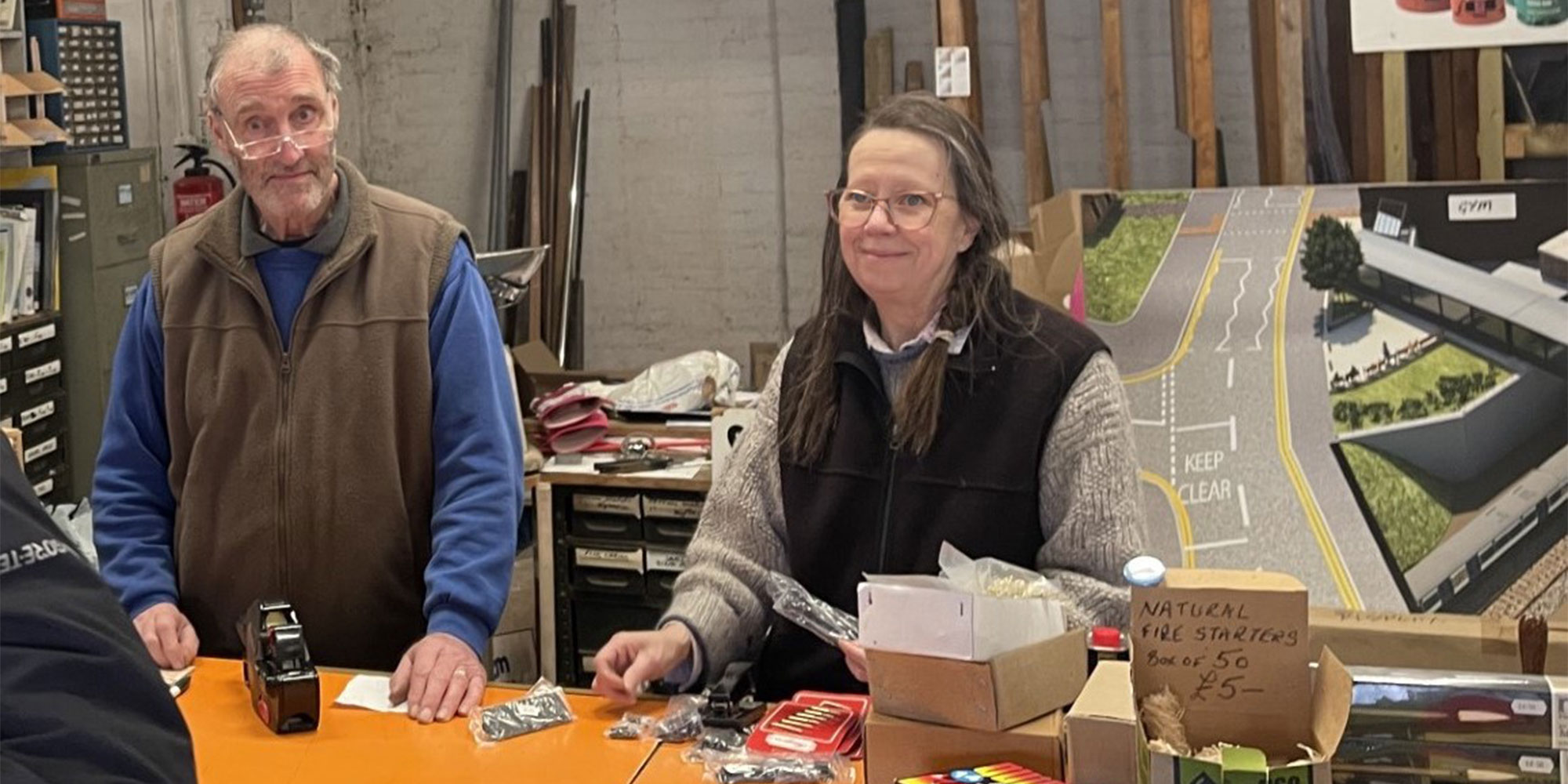
Jon Jaffa spent most of his working life self-employed, running an urban garden centre and traditional ironmongers in King’s Heath, Birmingham.
The Two RonniesAfter buying York Supplies from the family that founded it in 1947, Jon and his wife continued to run it as a family business. ‘My wife worked there, my kids worked there. Everybody in the community knew us.’
While Jon and his wife Jean always talked about one day retiring to the seaside – Birmingham is the most landlocked major city in the UK – he never actually had a plan to stop working: ‘I loved what I did, it was physically good for me and I was paid for it…why should I retire?’
Jon told us he didn’t pay into a pension while he was self-employed, choosing to invest in the business instead.
'I was part of various organisations for self-employed people and business owners, and you’d often hear from someone about how much you should be paying into your pension…but there was no spare money! I had endless conversations of that type.'
In the early 2000s they moved location to buy their own premises. 'I thought of it as a keep-working plan, but it doubled as a retirement plan,’ he said.
Jon says he knew the risks of investing in his business at a time when high streets were struggling due to the rise of online retailers like Amazon. ‘Luckily, garden centres were doing well in the midst of that, and our particular shopping centre was very successful.’
How I retired
When Jon and Jean’s older daughter moved to Portsmouth, their dream of retiring by the sea started to become more real.
‘My daughter set the idea in motion a few years before I reached retirement age,’ Jon said ‘She would point out how much we loved visiting them in Portsmouth…we were drawn into the lovely place.’
Once Jon and Jean expressed interest in retiring in 2022, the family began a collaborative and methodical decision-making process. The couple took regular visits to Portsmouth to get to know the neighbourhoods, mapped out their priorities for how they’d like to spend time in retirement – sea swimming and painting for Jean, cycling and working on the house for Jon – and created spreadsheets of their finances in the future.
This was interspersed with family conferences, where they’d agree actions for the next phase of the process, with their older daughter bringing her experience as a business analyst to the project. ‘We had great fun learning what she does at work,’ Jon said. ‘Retirement was a family activity.’
How I funded my retirement
Having not paid into a pension for most of their working lives, Jon and Jean were relying on the sale of their business to provide an income in retirement.
At first, the only interest they received was from property developers. But when word got round that Jon was thinking of retiring, local residents came up with a plan to take the shop into community ownership.
‘Customers would come in and say "You can’t sell the shop, you can’t go." That’s when the idea for the co-op started to gather momentum.’
The York Supplies Action Group was formed, and in April 2023 it received Financial Conduct Authority approval to operate as a community benefit society, meaning any profits from the business must be used for the good of the community.
The group needed to raise £600,000 to purchase the business and premises, but Jon and Jean were happy to delay their retirement to give it time to raise the funds.
When the society launched its community share offer that summer, giving local residents the opportunity to invest in the business, it reached its £350,000 target in just six weeks. With additional match and grant funding from the government, the group bought the business in March 2024.
'When you come to sell a business, it will often be closed,’ Jon said. ‘It can be traumatic for the person who ran it for 30 years. But there was this outpouring of love for me and my family at the point of sale…The business is still running, and it’s got this lovely feel to it.’
Find out more:Life in retirement
Jon said the early days of retirement were so busy that they didn't notice the loss of work.
The couple sold their house in Birmingham later that autumn and rented a flat overlooking the sea in Portsmouth while they waited for their dream retirement home to come up.
The couple moved into their new home in March 2025, around three years after they first decided to retire, but Jon says it was worth investing the time. ‘Doing it systematically, writing things down and keeping on track with our priorities meant we could be confident in our decision.’
Even when the dust settled, Jon said he didn’t find it hard to adjust to life after work. ‘I didn’t have that same cliff edge you might have retiring from an employee position. Running your own business means you have to be self-motivated. Now I’m self-motivated to do other things.’
While he’s no longer behind the counter, Jon still helps people fix things as a volunteer at his local repair café and library of things. ‘Getting involved in the local community has helped enormously.’
And he’s cycling, reading – ‘I’m reading all the books I’ve ever wanted to read’ – and enjoying life by the ocean. ‘As you walk down towards the sea and the sky gets bigger, it’s a very different feeling. There’s no sense of that scale when you’re in the city.’
While Jon never intended to retire, he has no regrets. 'I’m just enjoying being able to do what I want,’ he said. ‘I can heartily recommend it.’
Find out more:Will pension saving get easier for the self-employed?
 Olivia Wood, Which? senior money policy adviser, says:
'While pension saving has become the default for most employees thanks to automatic enrolment, the self-employed have been left behind. As the Pensions Commission highlighted in its interim report, only 4% of those who rely solely on self-employment are actively saving into a pension.
'When it comes to pensions, those who work for themselves face unique challenges. Income is often unpredictable, and without support from an employer, the onus is all on them to find a provider, navigate confusing jargon and set up contributions manually – a complex task that's easily deprioritised if you're a busy sole trader.
'But change may be on the horizon. With final recommendations due next spring, we're calling on the Pensions Commission to set out how government and industry could work together to make pension saving as easy as possible for the self-employed.'
Find out more:source https://www.which.co.uk/news/article/how-i-retired-i-never-planned-to-stop-working-aKyQn5k8RWgy