
However, despite growing demand, aerosol sprays are not included in Which? sun cream tests.
The reason for this is simple: the gap between laboratory results and real-world usage can be significant.
How are aerosol spray sunscreens tested?
To determine the SPF in the lab, manufacturers use international standard (ISO) methods. These require aerosols to be ‘degassed’, meaning the propellants are removed and the remaining liquid is tested in the same way a lotion or pump-action spray formula would be tested.
For aerosol sunscreens, this creates an idealised 'best-case scenario' that may not reflect how consumers typically apply them outdoors.
This means that the amount of product used in testing is unlikely to reflect the amount of sunscreen formulation that actually reaches the skin during real-world use.

Skin coverage from aerosol spray sunscreens
Similarly, this impacts for how long you should be spraying yourself, as this varies significantly by product - with some brands requiring four seconds to get the recommended amount of sunscreen on one limb, and others needing 14 seconds.

Are aerosol sunscreen sprays a waste of money?
Studies also show that wind speed can affect ‘overspray’, this is when fine spray droplets drift through the air and land on nearby surfaces instead of where you intended to spray.
In a light breeze, more than a third of sunscreen can be lost to the air and miss the skin; in moderate wind, that figure can rise dramatically. Given that people may be reapplying their sunscreen throughout the day while outdoors, this could be concerning.
To achieve the SPF stated on the label, you may need to spray for significantly longer, making these 'convenient' sprays potentially more expensive and less effective than expected.
The Australian researchers looking at aerosol sprays found that, depending on the brand, most contained enough sunscreen for two to three whole-body applications before the can ran empty.
If you're reapplying regularly (as is recommended), you could end up getting through one can of sunscreen per day on your holiday, which could see costs adding up.

Are spray sunscreens bad for the environment?
There’s also the sustainability factor.
 The and beauty products, according to a dermatologist
How should you apply spray sunscreen?
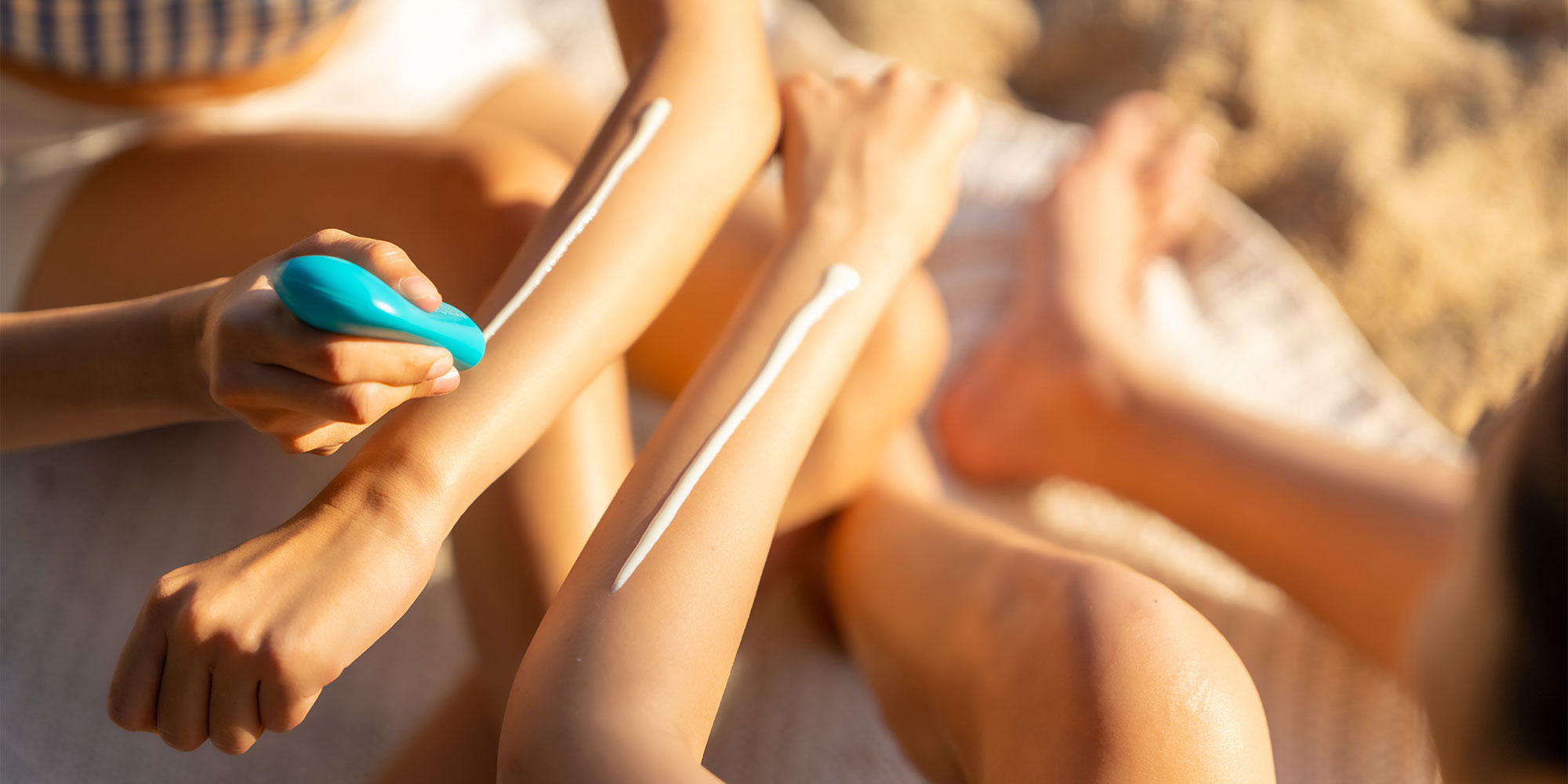
If you choose to use an aerosol sunscreen, you should:
Shake the can vigorously.Hold the nozzle close.Spray generously and continuously.Never spray directly onto your face.Always rub it in.If you're using a lotion or pump spray (non-aerosol), remember to:
Apply one teaspoon for each body partSPF application guide:source https://www.which.co.uk/news/article/the-hidden-flaws-in-spray-sunscreens-a-which-scientist-explains-why-we-dont-test-aerosols-a2YnI4l25o5E