
Most of us know that bacon is an indulgence rather than a health food, but when you're standing in the supermarket aisle facing dozens of choices, it’s hard to know which could be reasonable compromises and which are hidden health traps.
Out of 57 pork bacon products, we focused on 28 that provided consumers with cooked nutritional values, and six plant and poultry alternatives to see how they stack up on fat, salt and preservatives. We found that your choices can make a big difference to your nutrition.
Key findings
more than 40%Expert view: is there such a thing as 'healthy' bacon?
Charlotte Phillips is a Which? nutritionist and senior researcher
'The short answer is no. Bacon is a processed meat that's high in salt and saturated fats, and may have nitrites/nitrates added to extend shelf life and preserve colour.
It should be considered an occasional dietary indulgence rather than a staple part of your diet, as it offers no active health benefits beyond its protein content, which you can easily obtain from healthier sources such as eggs, lean meats and beans.
However, if you're buying bacon for your weekend breakfast, you can make informed choices by knowing what to look for on the labels because the nutritional gap between brands can be quite drastic.
Our expert's top bacon picks
Best plant-based and overall recommendation: THIS Isn't Bacon Rashers 100% Plant-Based
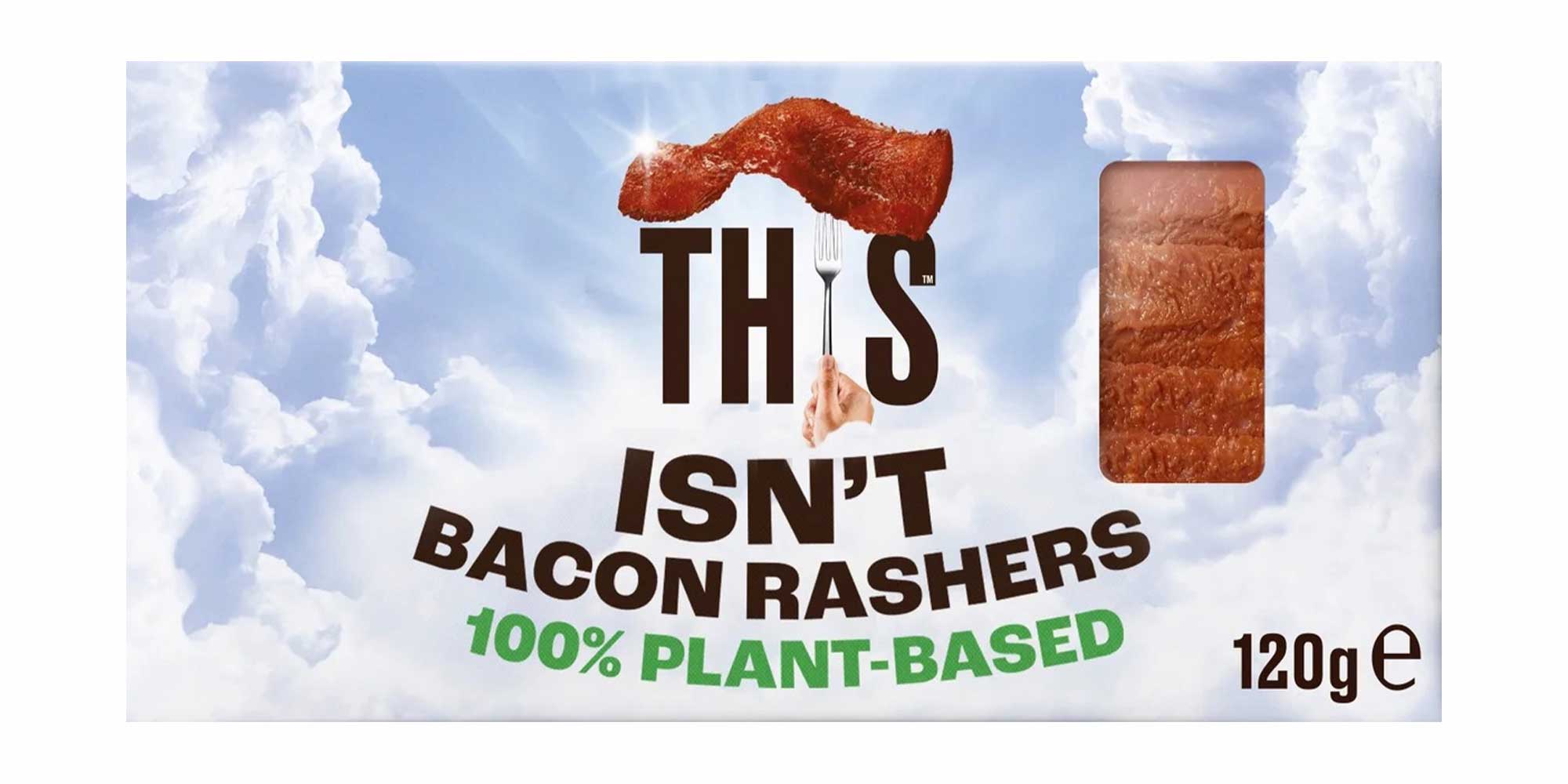
'From a heart-health perspective, plant alternatives are the ultimate all-rounders: they tend to be nitrite-free, lower in saturated fat and they easily rival traditional meat bacons for protein. THIS Isn't Bacon not only wins the plant-based category by keeping its saturated fat to a negligible 0.1g per 100g and salt lower than some of the meat rashers, but it also takes my top recommendation overall for beating the meat options, too.'
Best pork bacon choice: Morrisons Nitrate Free Unsmoked Back Bacon
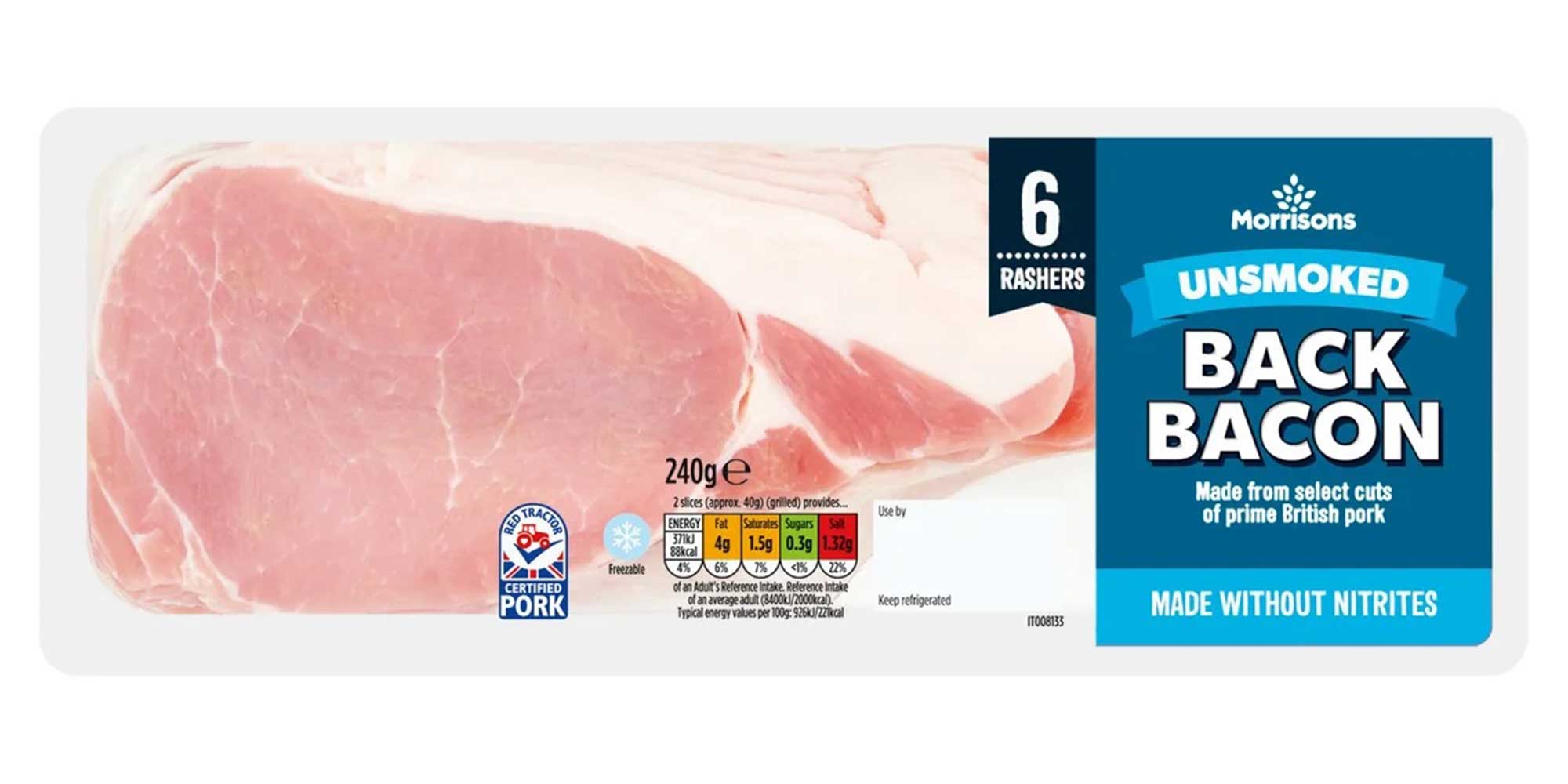
'This back bacon strikes a balance across three major health factors, as it delivers zero nitrates/nitrites while keeping both saturated fat (3.7g per 100g) and salt (3.3g per 100g) lower compared with some of its other supermarket competitors.'
Best poultry choice: Mattessons Lightly Smoked Turkey Rashers
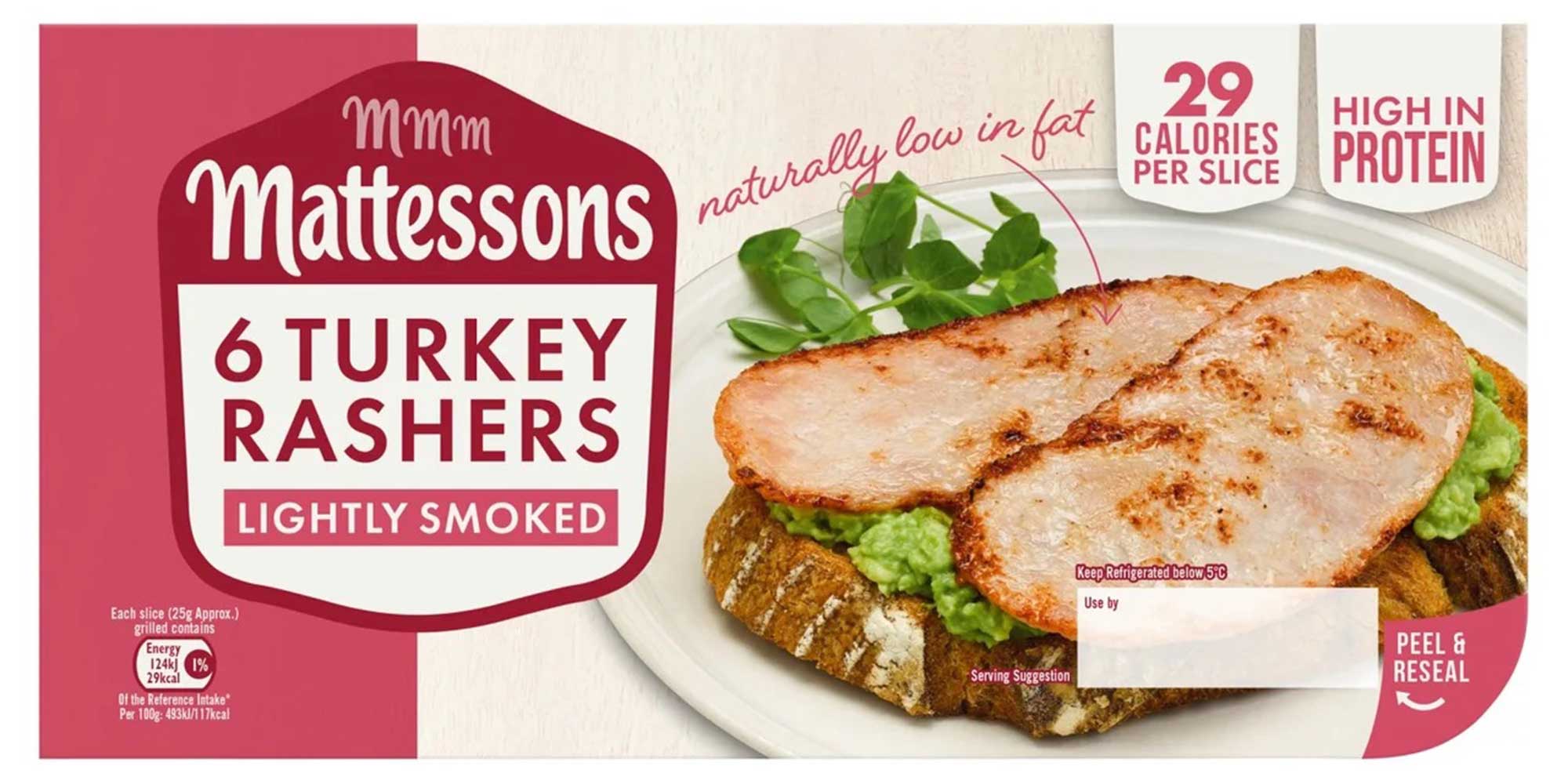
'At just 29 calories and 0.1g of saturated fat per cooked rasher, Mattessons cuts saturated fat to virtually zero, lightening up your breakfast fry-up while still matching standard bacon on protein density. It's an impressively lean swap, provided you keep an eye on your overall daily salt intake.'
The raw versus cooked nutrient labelling trap
'When comparing brands, watch out for an important labelling inconsistency: some packs give nutritional values for bacon as sold (raw), while others report them as consumed, after cooking,' explains Charlotte.
'This can make like-for-like comparisons difficult. Bacon loses water during cooking, and some fat may also be lost. As a result, the amount of salt or protein per 100g can become more concentrated in cooked bacon than in the same product when raw.'
'How much the nutritional values change depends on factors such as the cooking method, temperature, cooking time, and how much fat and water are lost.'
'For our top recommendations, we reported the cooked nutritional values where these were provided on pack (which was 28 of the 57 pork bacons we looked at), as these give a useful indication of the nutritional content of the bacon as prepared according to the manufacturer’s instructions.'
'When checking a label, look at whether the nutritional information is given 'as sold' or 'as consumed', and check any cooking instructions, before assuming one brand is saltier or fattier than another.'
The healthiest way to cook bacon
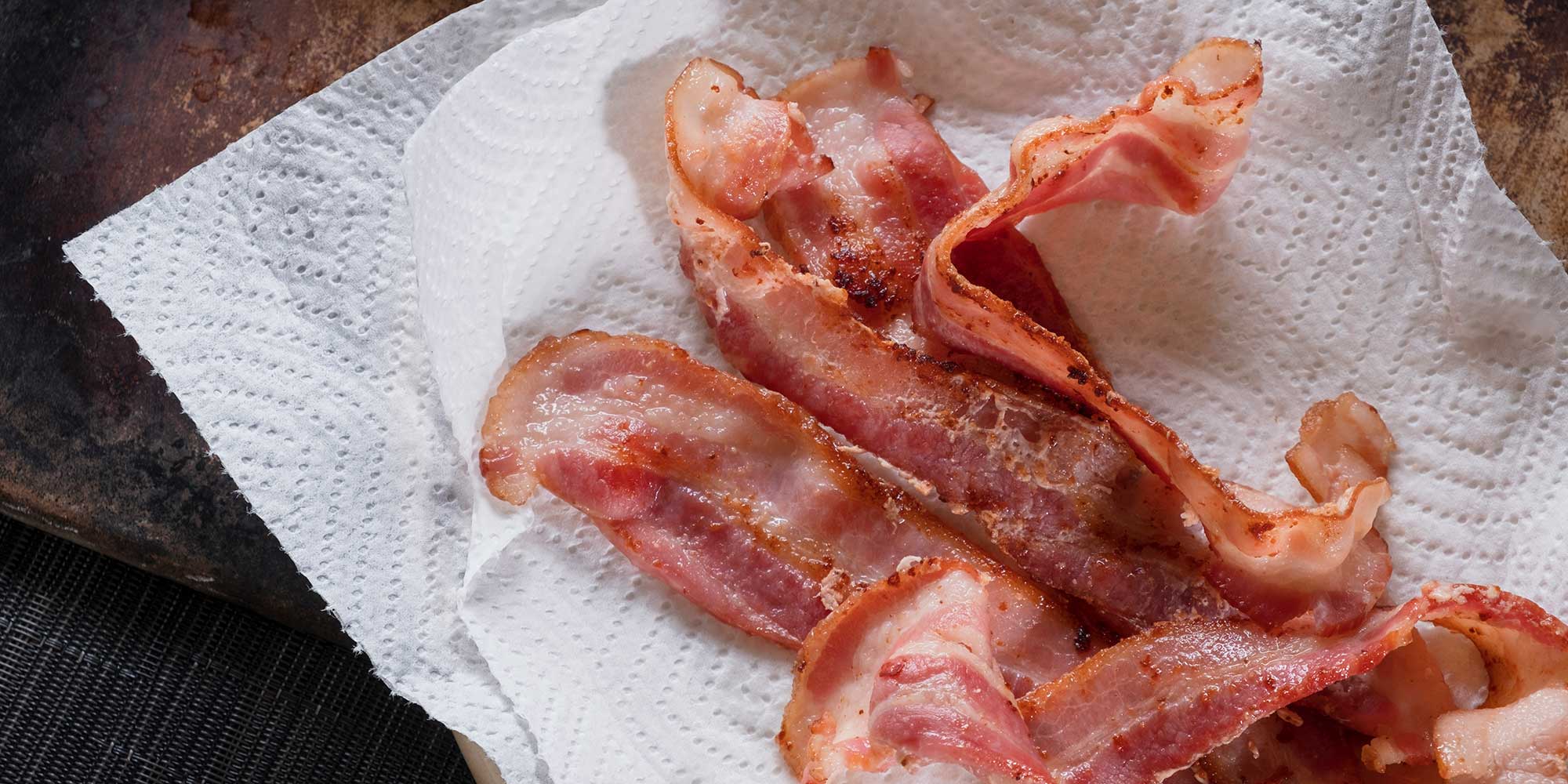 Grill or bake bacon on a wire rack to let excess fat drip away Use scissors to trim off visible fat before cooking Use bacon as a garnish rather than the main event – we analysed 52 premium-brand butters and spreads, including Anchor, Flora and Lurpak, to reveal the healthier and least-healthy choices
What makes bacon 'unhealthy'?
The World Health Organization has classified processed meat as a Group 1 carcinogen. This includes bacon and ham.
What this means is that there is sufficient and convincing scientific evidence that processed meat causes cancer (primarily colorectal). Tobacco is also a Group 1 carcinogen, but this doesn't mean a strip of bacon and a cigarette carry the same risk – it means the strength of evidence that links them to cancer is equally strong.
Three health ‘baddies’ are associated with bacon: salt, saturated fat and preservatives including nitrites and nitrates. Here’s why they matter, and what it means for the 63 products we scrutinised.
Salt
Excess sodium is just one of bacon’s downfalls. High salt levels in foods can increase the risk of high blood pressure and heart disease. Under UK traffic-light guidelines, none of the 25 pork bacons scored green or amber for salt – every single one was red (high salt). Based on cooked figures, salt content varies nearly threefold, from 1.63g to 4.63g of salt per 100g.
Two rashers of the saltiest option (Morrisons The Best) contain 2.5g of salt, which is more than 40% of an adult’s 6g daily maximum. However, switching to a lower-salt option (for example, Aldi Smoked British Sweetcure Back Bacon at 0.55g per two rashers) can help reduce your salt intake.
Saturated fat and calories
High saturated fat raises 'bad' LDL cholesterol, increasing heart disease risk. Official guidelines recommend capping daily intake at 20g for women (30g for men), with anything over 5g per 100g triggering a red traffic light.
Streaky bacon is the fattiest option, with just two streaky rashers (Finnebrogue Naked) containing 4.1g of saturated fat (more than 20% of a woman's recommended maximum and around 14% of a man's).
Nitrites and nitrates
Nitrates are found naturally in foods and are generally harmless. However, when added to meat and cooked at high temperatures, they react to form harmful compounds known as nitrosamines.
Nitrates and nitrites are added to bacon to extend shelf life, retain its pink colour and prevent the growth of bacteria that cause botulism. There has been a lot of debate about adding nitrates and nitrites to bacon, and some products don't include them.
accumulates high levels of nitrates, and when it's dehydrated into a powder, the natural nitrates convert into nitrites. These are chemically identical to the synthetic nitrites used in traditional bacon curing. If celery is used, by law it has to be labelled in the ingredients list as it's an allergen. Just one of the 63 products we looked at contained celery (Najma Smoked Turkey Rashers), where it was included as a spice alongside added sodium nitrite.Eliminating nitrates and nitrites also does not eliminate the health risks associated with bacon. The combination of red meat, preserving methods such as salting and smoking, and cooking at high temperatures means that bacon retains its risk profile.
Smoked or unsmoked bacon: is there a health difference?
In terms of calories, fat and salt content, smoked and unsmoked bacon are similar. Their nutritional profile is set by the cut and curing process – smoking is purely a flavour treatment added at the end.Although traditional wood smoking can introduce trace combustion compounds that may be harmful to health, many UK bacon brands use modern liquid smoke methods that may remove these while retaining the smoky taste. Ultimately, it comes down to which flavour you prefer.However, don't fall for the trap of thinking unsmoked bacon is naturally lower in sodium; unsmoked rashers in our test were frequently just as salt-heavy as their smoked counterparts. From lifestyle changes to plant sterols and statins, we look at the ways you can lower your cholesterol and why it matters7 lowest saturated fat bacons
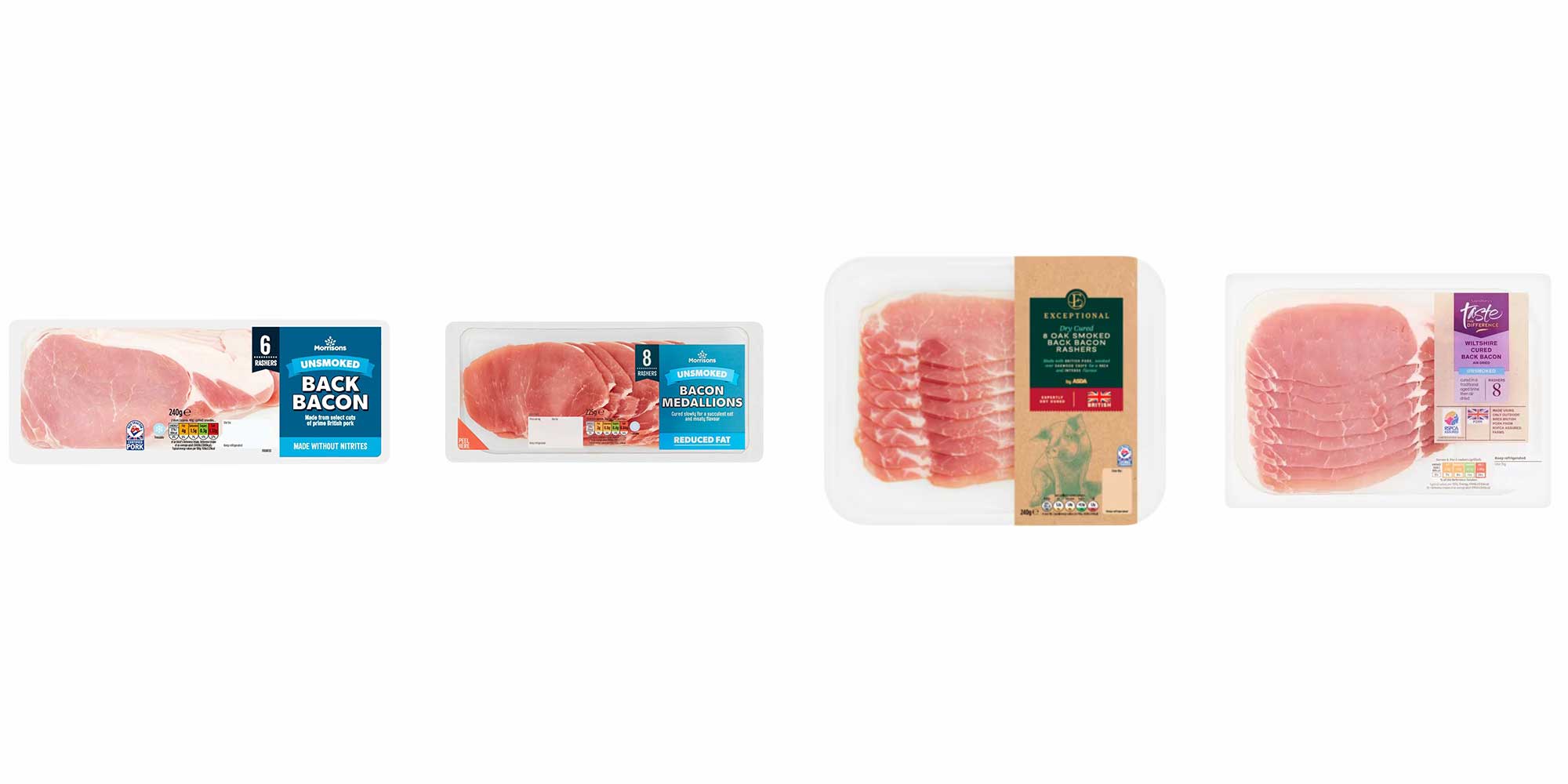
Morrisons Lean Unsmoked Bacon Medallions: 2.4g sat fat per 100g
Extremely low in saturated fat (2.4g) because the fat outer edge has been completely trimmed away, leaving only pure, lean pork loin.Morrisons Nitrate-Free Unsmoked Back Bacon: 3.7g sat fat per 100g
Keeps saturated fat low by using a lean back-cut rasher with excess fat removed.Asda Exceptional Dry Cured Oak Smoked Back Bacon: 4.3g sat fat per 100g
Well inside the top 7 for lowest saturated fat (4.3g) because dry-curing may remove excess moisture.
Sainsbury's Taste the Difference Unsmoked Air Dried Wiltshire Cured Back Bacon: 4.5g sat fat per 100g
Low in saturated fat (4.5g) because of the neatly trimmed cut that prioritises lean meat over fat.Lidl Unsmoked Rindless Cured Back Bacon: 5g sat fat per 100g
This standard back bacon cut is leaner than several dedicated 'lean medallion' products we looked at.
Sainsbury's Taste The Difference Unsmoked Air Dried Streaky Bacon: 5g sat fat per 100g
Impressively low for streaky bacon; if you grill as per instructions, the excess fat should drip off.Sainsbury's Unsmoked Back Bacon Rashers Without Nitrates: 5g sat fat per 100g
Keeps saturated fat down by using a naturally lean pork loin cut that has been closely trimmed of its outer fat edge.
– from Belazu and Filippo Berio to supermarket own-label bottles, our expert taste test reveals the best for dipping, dressings and cooking7 highest saturated fat bacons
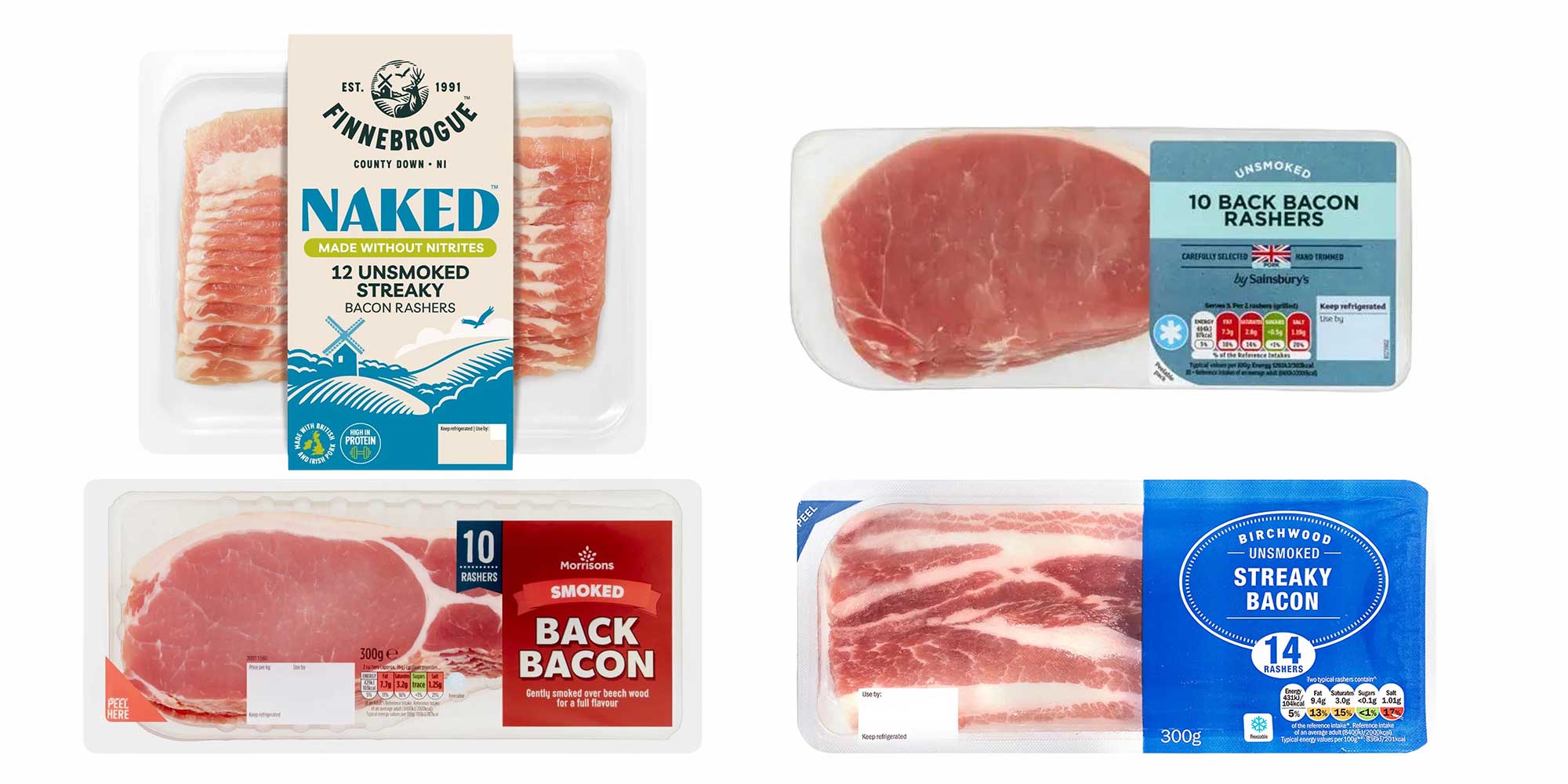
Finnebrogue Naked Unsmoked Streaky Bacon: 12.3g per 100g
This is one of the worst offenders for saturates. On the plus side, it's completely nitrite-free.
Morrisons Smoked Back Bacon Rashers: 8.9g per 100g
This contains a lot of saturated fat for a standard back bacon. It costs 50p per 100g and relies on a standard wet-cure with added nitrites.
Lidl Unsmoked Rindless Streaky Bacon: 8.8g per 100g
‘Rindless’ simply means stripping the tough skin but leaving the fat untouched. As a result, these budget slices trigger red traffic lights for both saturated fat and salt.
Sainsbury's Unsmoked Back Bacon Rashers: 8.8g per 100g
With nearly double the saturated fat of leaner options and high salt (3.73g per 100g), this sits deep in the red traffic-light zone.
Morrisons The Best Thick Cut Unsmoked Back Bacon: 8.6g per 100g
Paying extra for these thick-cut rashers buys heavy saturated fat and the second-highest salt tested, showing that a premium product doesn't mean healthier bacon.
Stamford Street Co Unsmoked Back Bacon: 8.6g per 100g
This budget option matches premium lines for high saturated fat, which is nearly double the saturated fat of lean back bacon. It's also high in salt (3.93g per 100g).
The Jolly Hog Black Treacle Extra Thick Cut Streaky Bacon: 8.5g per 100g
Adding a premium black treacle cure does nothing to reduce fat, leaving these thick-cut belly slices high in saturates alongside higher sugar and salt.
– Is Heinz the king of ketchups? We pitted it against cheaper supermarket own labels in a blind-taste test to find out7 lowest salt bacons
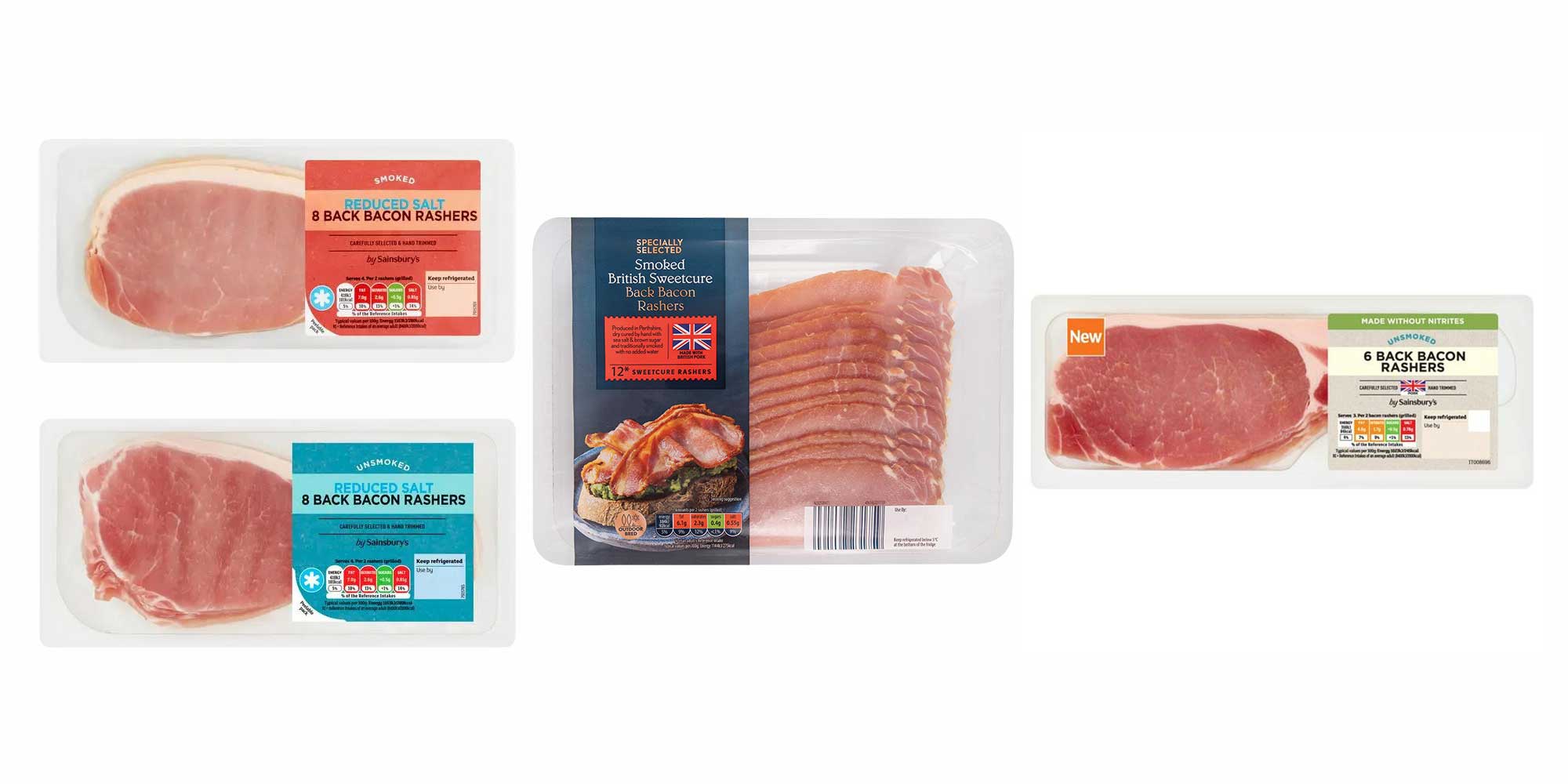
Aldi Smoked British Sweetcure Back Bacon: 1.63g per 100g
By far the lowest salt levels of all the cooked bacons we looked at, with a high meat content (96%), meaning fewer added ingredients.
Sainsbury's Reduced Salt Smoked Back Bacon: 2.26g per 100g
Achieves a noticeable reduction in salt by replacing traditional heavy brining with a brown sugar cure.
Sainsbury's Unsmoked Reduced Salt Back Bacon: 2.26g per 100g
Cuts salt by nearly 30% compared to the 3.11g cooked pork bacon average in our analysis, placing it among the lower-salt back rashers we reviewed.
Sainsbury's Unsmoked Back Bacon Rashers Without Nitrites: 2.27g per 100g
This is just 0.01g per 100g lower than its 'reduced salt' version.
Aldi Oakhurst Smoked Reduced Salt Back Bacon: 2.33g per 100g
Although it uses a sweet sugar cure, the salt levels are below the cooked bacon average of 3.11g per 100g across our review.
Asda Unsmoked Back Bacon Rashers Without Nitrates: 2.40g per 100g
It combines a nitrate-free cure with lower salt, coming in comfortably below the cooked bacon average.
Morrisons Lean Unsmoked Bacon Medallions: 2.61g per 100g
Although it sits at the higher end of our low-salt list, this lean cut still contains significantly less salt than average cooked back bacon.
: Porky Whites, The Jolly Hog and supermarket bangers taste tested7 highest salt bacons
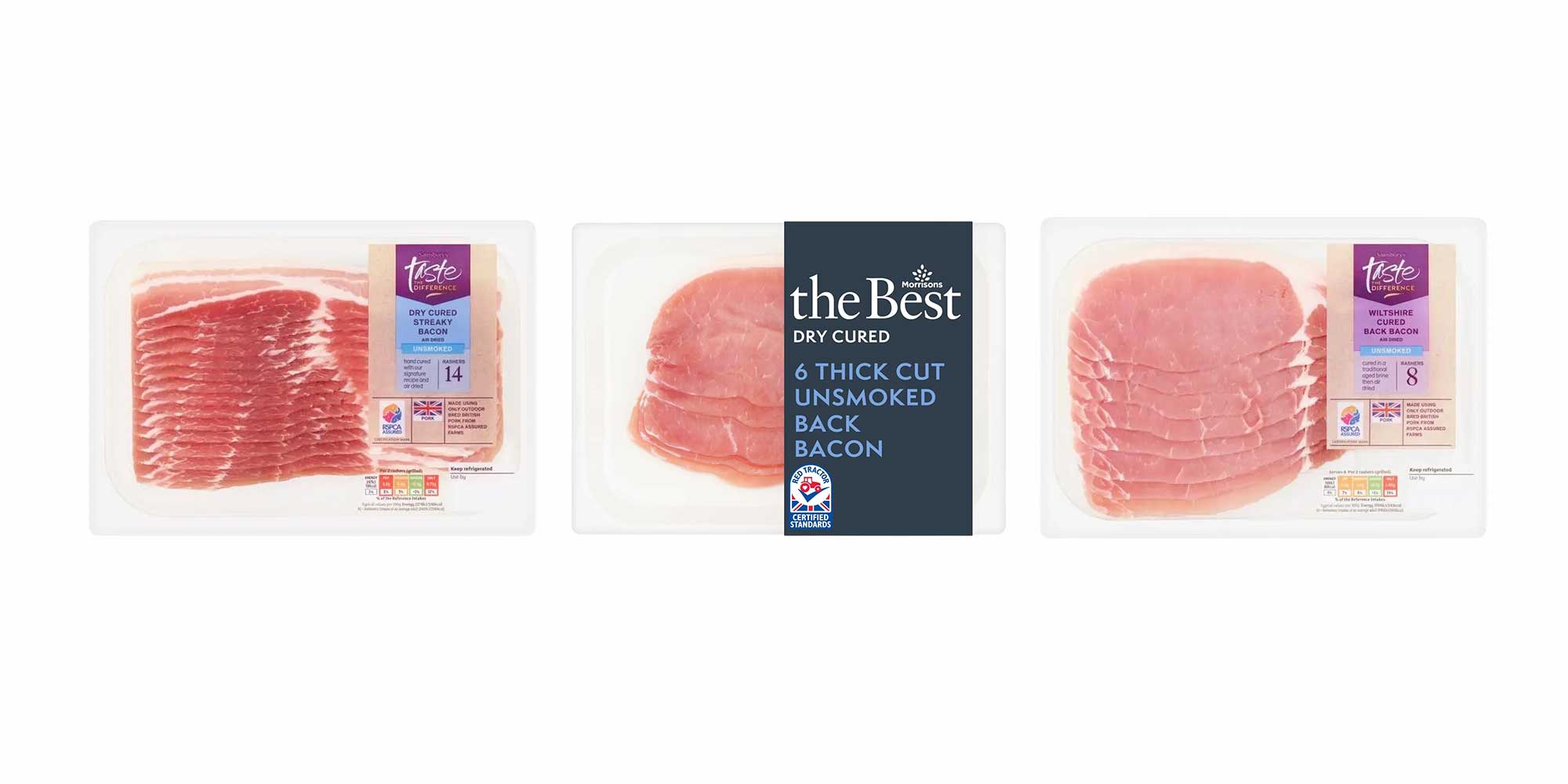
Morrisons The Best Extra Thick Cut Unsmoked Back Bacon: 4.63g per 100g
Tops the salt scale as the single saltiest product in our review, containing nearly 50% more salt than the 3.11g average for cooked bacon.
Sainsbury's Taste the Difference Unsmoked Air Dried Wiltshire Cured Back Bacon: 4g per 100g
This rasher packs nearly 30% more salt than average cooked bacon overall, despite its premium positioning.
Sainsbury's Taste the Difference Unsmoked Air Dried Streaky Bacon: 3.95g per 100g
Traditional air-drying removes moisture and, in this instance, leaves a high salt load almost 25% above average.
Stamford Street Co Unsmoked Back Bacon: 3.93g per 100g
Shows that some budget bacons carry a heavy salt load, matching levels often found in heavily cured premium ranges.
Lidl Deluxe Dry Cured Smoked Back Bacon: 3.81g per 100g
Traditional dry curing draws out moisture during production, resulting in a rasher with above-average salt levels.
Asda Just Essentials Unsmoked Back Bacon: 3.80g per 100g
It sits near the top of our high-salt list, with 20% more salt than average, proving a budget price is no guide to salt levels.
The Jolly Hog Black Treacle Extra Thick Cut Streaky Bacon: 3.79g per 100g
The rich black treacle cure hides a heavy salt load, giving these thick streaky slices nearly 20% more salt than average.
We investigate whether the science backs it up, and what really matters for your gut healthNitrite-free bacon products
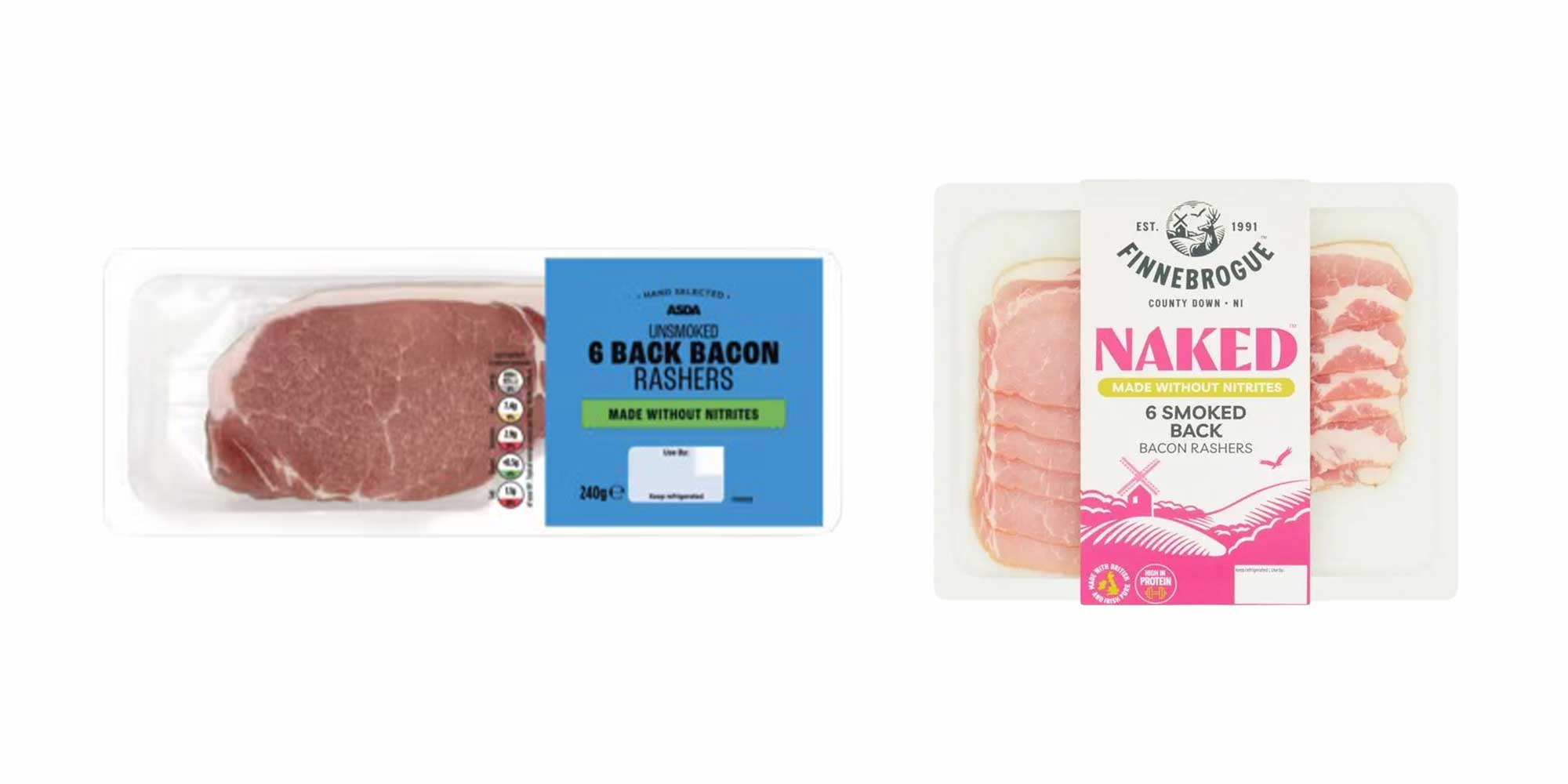
Most of the pork bacon products we reviewed contained nitrites/nitrates. Here are seven examples of ones that don't.
Plant and poultry bacon alternatives
Although there are far fewer plant and poultry-based bacon alternatives on supermarket shelves, we looked at six popular options to see how they compare with traditional pork. Plant rashers may offer a lower-fat swap, but can be high in salt, while poultry provides a leaner middle ground for meat-eaters.
However, comparing poultry rashers directly against one another requires care: Mattessons Lightly Smoked Turkey Rashers is the only poultry option in our review that provides nutrition data for the cooked product as consumed. Turkey loses water during cooking, so raw per-100g numbers on pack may appear lower.
By giving cooked values, Mattessons gives the most relevant picture for consumers, containing 116 kcal, 0.5g of saturated fat, 24.2g of protein and 2.5g of salt per 100g cooked. You should also note that while plant rashers are 100% nitrite-free, all turkey products tested relied on sodium nitrite. For meat-eaters wanting a leaner swap, choosing products like Mattessons that state cooked values offers the most transparent choice.
However, shoppers seeking turkey-based cuts may prefer options made from whole turkey breast, such as Oakpark Naturally Smoked Turkey Breast Rashers. While Oakpark offers a good meat profile, keep in mind that its on-pack numbers reflect raw values, meaning its cooked salt and fat levels per 100g might end up higher than stated on the label.
We've analysed more than 80 jars of nut butters to see how nutritious they really areWhat we learned about bacon
Lower-salt options make a massive differenceDon’t mistake ‘dry-cured’ for a healthier choicePork alternatives are protein-rich but come with trade-offsPick medallions over streaky to cut saturated fatChoose ‘breast’ or ‘loin’ for turkey baconDon't stress over sugarNutrition markers: salt, sugar and fat
source https://www.which.co.uk/news/article/is-there-such-a-thing-as-healthy-bacon-aTA0l2r0cqPK