
As more of us live to old age, one major consideration is how to make a finite pot of retirement savings last for several decades.
But it's also important to understand how community, social connection and where we live can shape our experience of ageing.
Here, we explore what's important for a long, happy retirement and hear from one Which? member about the conversation that changed the course of her retirement.
More people living to old age
As of 2025, there were an estimated 645,000 people aged 90 or over in the UK – an increase of 55% since 2005, according to recent figures from the ONS.
While women make up around two thirds of those aged 90+, the number of men at older ages is increasing at a faster rate.
Natalie Turner, deputy director for homes and communities at the Centre for Ageing Better, says that tackling the wider determinants of health across people’s lives is key to addressing inequalities in how we age.
‘While there is no guarantee how long any of us will live in retirement, the expected length of time that an individual will get, and the quality of that time in retirement … are very much related to their postcode and their wealth.'
Turner wants the government to prioritise tackling the factors that impact our health across our lives, to ensure 'that everyone has the same opportunities to have a good job, financial security and a decent home, and to develop and maintain connections to family, friends and a supportive wider community.’
Find out more:‘Speaking to retirees was a very useful exercise’
Turner says that good social connections in later life help maintain both our physical and mental health as we age, including reduced risk of cardiovascular disease, stroke, depression and dementia.
Professor Dame Averil Mansfield, a retired vascular surgeon, says that learning a new instrument in retirement has been good for her brain and her social life.
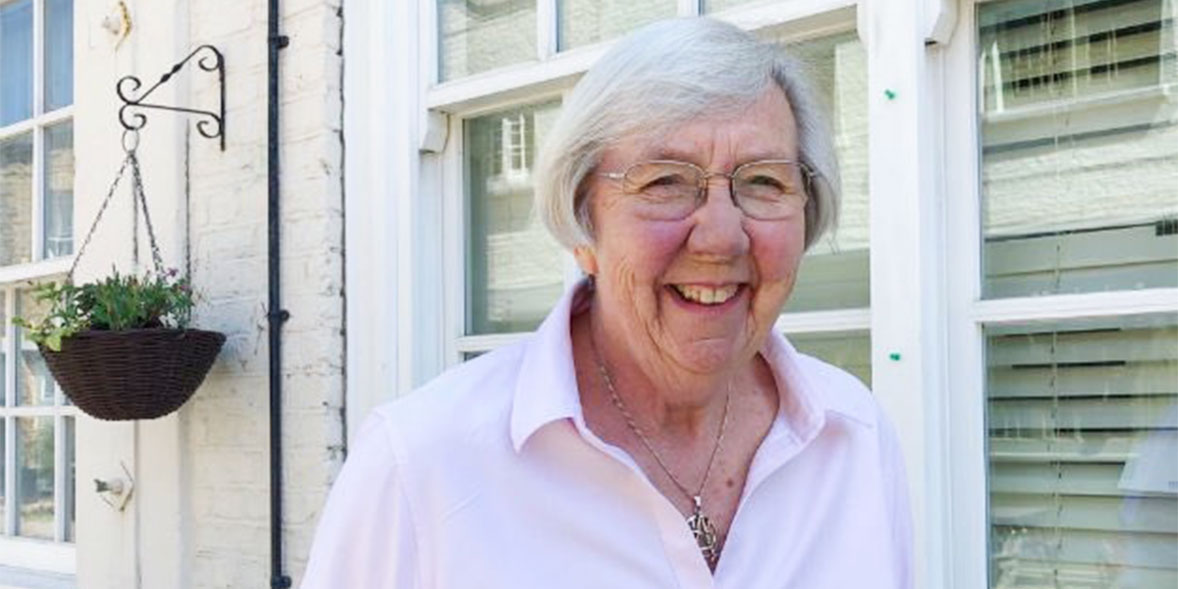
Averil told us that when she qualified in 1960, doctors were told to expect to live for six months after retiring at 65. But at 89, music is the main activity of her old age: 'I love it!'
Averil said her preparation for retirement began when she visited seven retired members of the Liverpool Medical Institution in order to write their citations, and found that three of them had thrown themselves into new interests.
‘One of the doctors was writing coastal navigational charts of the UK!’ Averil recalled. ‘They were full of life and interesting to be with. I decided that’s the retiree I wanted to be – the one that’s got something that drives me.’
Find out more:‘Pick something you enjoy and go for it’
After qualifying in 1960, Averil went on to have a remarkable career in vascular surgery. She played an important role in developing carotid endarterectomy and treating thoracoabdominal aortic aneurysms – procedures that have saved thousands of lives – and became the first female Professor of Surgery in Britain in 1993.
While Averil enjoyed her job tremendously – 'it was a privilege to be doing it' – she knew she would need something to replace being a surgeon when she retired.
Averil had played the piano all her life, but the demands of the job left little time to play with others. ‘I was working silly hours – vascular surgery has a high emergency load, so night calls were a regular event,’ she said.
‘I promised myself I would play in an orchestra in retirement,’ Averil told us.
And at 65, she started learning the cello. Averil says that learning an instrument as an adult is completely different. ‘I had the stupidity to say surely [playing] one note at a time can’t be that hard,’ she said. ‘I was so unbelievably wrong – I despaired at the beginning’.
But Averil stuck with it, and 24 years later she still plays regularly with The Learning Orchestra, St Barts Academic Festival Choir and Orchestra as well as a quartet and two trios.
‘The loveliest thing about sticking with it is that it has brought me into contact with so many people,’ she said. ‘I meet people with no medical background and a much younger group than I would normally mingle with.’
4 things to consider when planning for a long retirement
1. Purpose and community
Retirement can have a profound and varied impact on people’s sense of purpose: while one in five retirees in our May 2026 survey said the impact was better than expected, a similar proportion said it was worse.
For many people, like Averil, developing new interests can help ease the transition. If you’re not sure where to start, the University of the Third Age provides peer-led learning for people who aren’t in full-time work, with over 1,000 local groups.
Turner says that how our communities are designed can have a big impact on our experience of ageing: ‘The availability of certain community services and features such as transport, seating and public toilets can mean the difference between being able to get out and about to see friends and family and not being able to do so.’
2. Making your pension last
While defined benefit pensions provide a guaranteed income for life, the shift towards defined contribution pensions has put more responsibility on savers to build up an adequate pension and make it last over several decades.
Accessing your pension via drawdown while leaving the rest invested can give your savings additional time to grow in retirement, but you’ll need to manage withdrawals carefully to ensure you don’t run out of money.
An annuity provides guaranteed income for life, but be mindful of inflation, which can erode the purchasing power of your income if you opt for a fixed rate. Index-linked annuities increase over time, but you’ll be offered a much lower rate to start with.
3. Care costs
Soaring care costs put significant strain on people’s retirement savings, and our research found that over half of retirees worry about affording care in the future.
If you need to pay for some or all of your care, your options include paying from savings, buying an immediate needs annuity or using the value of your home. You may be able to arrange a deferred payment agreement with your local council if you don’t want to sell your home straight away.
Find out more:4. Digital inclusion
Averil told us that staying up to date with technology has helped – especially given how quickly it’s evolved through the course of her retirement: ‘That's an amazing thing about modern life. When I was first going to orchestra, I would go and buy a CD of the music.’
New research from Age UK has found that while our society increasingly requires us to be online, nearly four in 10 over-65s in England are either partially or fully digitally excluded.
It’s calling on the government to lead an ambitious and sustained digital inclusion programme with the private and voluntary sectors, while guaranteeing offline access to all essential services, such as banking and the NHS.
Find out more:source https://www.which.co.uk/news/article/number-of-people-aged-90-is-rising-what-do-you-need-for-a-long-happy-retirement-aoyrv0V6Xibh